Sonallah Ibrahim, Incorruptible Novelist, 1937–2025
Sonallah Ibrahim, the Egyptian leftist novelist whose documentary style and steadfast independence helped remake the modern Arabic novel, died in Cairo on August 13, 2025. He was 88. Egyptian and international outlets reported his passing after an illness; local reports said he had suffered from pneumonia.
A life shaped by prison and principle
Born in Cairo on February 24, 1937, Ibrahim came of age as Egypt itself was reinventing its politics and society. He studied law at Cairo University and, as a young leftist in the 1950s, joined the Communist-leaning Democratic Movement for National Liberation. In 1959, amid Gamal Abdel Nasser’s crackdown on Communists, he was arrested and spent five years in prison, much of it in the remote, notorious al-Wahat Prison in the Western Desert. Those years gave him both the raw material and the method that would define his work: a calm, observant voice, stripped of ornament, that records a life hemmed in by surveillance and bureaucracy.
Upon his release in 1964, Ibrahim began composing the terse, fifty-page novella that first made his name: That Smell (Tilka al-rā’iḥa, 1966). The book’s unadorned description of a former political prisoner’s drift through Cairo, punctuated by police check-ins and stifling routine, was instantly controversial. It was banned in Egypt upon publication, yet it became a touchstone of Arabic literary modernism. In English, it is available alongside Notes from Prison, revealing the work’s roots in the diaries he kept and smuggled out during his incarceration.
After several years abroad—including time working in East Germany and, crucially, pursuing film studies in Moscow in the early 1970s—Ibrahim returned to Cairo in 1974 and devoted himself entirely to fiction. His Moscow years would later surface, refracted through fiction, in Ice (al-Jalīd), a novel set among Arab students in the late Soviet era.
If prison taught him to observe power closely, the rest of his life taught him to resist it publicly. In 2003, during Hosni Mubarak’s rule, Ibrahim was called to the stage at Cairo Opera House to accept a prestigious state literary prize. Instead of accepting, he read a short statement and refused it—an extraordinary act at the time. He plainly stated that he could not accept an award from a government that oppressed its people and protected corruption. This gesture made him a moral symbol for a generation of readers and writers.
The works that changed the language of the Arabic novel
Ibrahim’s bibliography is varied, but his landmarks are unmistakable.
- That Smell & Notes from Prison (1966): a modernist classic whose flat, reportorial prose marks a decisive break with prior styles.
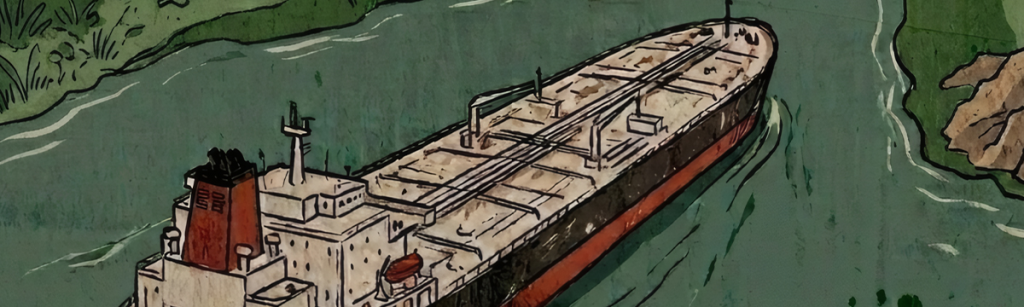
- The Star of August (Najmat Aghustus, 1974): a large-scale, documentary-inflected story set around the building of the Aswan High Dam, an emblem of Nasser-era ambition and discipline.
- The Committee (al-Lajna, 1981): a Kafka-dark satire about a nameless petitioner judged by a faceless authority—an allegory of Egypt’s infitāḥ (“the open-door policy” launched by Anwar Sadat for transition to free market capitalism in 1974) and the humiliations of censorship and consumerism.
- Beirut, Beirut (1984): a stylized panorama of Lebanon’s civil war, stitched from notes, reportage, and testimony to expose violence as a systemic force rather than a sudden eruption.
- Zaat (Dhāt, 1992): perhaps his most widely beloved novel, intercutting the life of an office worker with collaged headlines and clippings, to anatomize how official discourse seeps into private life.
- Sharaf (1997): a ferocious prison epic about class, corruption, and global capital’s long shadow over the Third World, often read as a companion to Zaat.
- Warda (2000): a sweeping, time-shifting novel that follows a revolutionary woman amid the leftist uprisings in Oman, revealing Ibrahim’s gift for fusing archival research with intimate storytelling.
- Amrikanli (2003): a sly campus novel set in the United States, where personal entanglements mirror geopolitical ones.
- Stealth (al-Talassus, 2007): a coming-of-age tale set just before the 1952 Free Officers’ coup, told in a voice as watchful as its title suggests.
- The Turban and the Hat (al-‘Imāma wa-al-Qubba‘a, 2008): a historical novel of Napoleon’s occupation of Egypt, written as the “found” diary of a Cairene witness, probing the ambivalence of fascination and resistance in a colonial encounters.
- Ice (2011): a novel of the Soviet 1970s whose cool tone and observational method cast a skeptical eye on socialism’s promises and the compromises of expatriate life.
- 1970: The Last Days (2020): a late meditation on the end of the Nasser era, written with Ibrahim’s signature documentary bite.
Throughout these books, critics have observed an “archival” or “documentary” technique—newspaper headlines, official bulletins, ads—integrated into the narrative. In Zaat, this montage alternates with the heroine’s story each chapter; in other novels, it appears like a news ticker, emphasizing that private life is never free from public language. Readers sometimes follow only one thread or the other; Ibrahim considered that ambivalence part of his experiment.
That method, combined with a clipped first-person voice, gave his fiction the feel of a dossier: evidence assembled for judgment. As Robyn Creswell wrote in The New Yorker, Ibrahim’s work has the “exposed structural beams” of research, turning fiction into a laboratory where history is tested claim by claim.
An unbending public conscience
Ibrahim’s refusal of the 2003 state prize, widely known as the Arab Novel Award, was deeply personal and resolute. It symbolized decades of principled distance from power, starting with the toll he paid as a young activist. Eyewitness accounts from that night describe him approaching the lectern at the Cairo Opera House and calmly reading a statement rejecting the award. He condemned the government’s repression and corruption and criticized its stance toward Israel and the United States during the Second Intifada—then quietly walked off. The scene became a memory passed down through generations.
He maintained his clear-eyed stance during and after the 2011 uprising. He admired the bravery of those who occupied Tahrir Square but warned that without organization and a broader historical perspective, the breakthroughs would be fragile. A decade later, his skepticism seemed less like despair and more like hard-earned clarity.
Crucially, Ibrahim’s politics were inseparable from his aesthetics. His public posture and the prose style answered to the same ethics: precision, sobriety, and refusal of spectacle, or the consolations of sentimentality. Even when he wrote historical fiction, he did so to press on the present. The Turban and the Hat reads the French occupation not as a vanished episode but as a mirror in which contemporary Egyptians might study the moods of conquest and collaboration. Ice returns to Soviet Moscow not for nostalgia but to examine how ideals curdle and why they endure.
A writer of the “Sixties Generation,” and beyond
Ibrahim is often linked to Egypt’s “Sixties Generation,” a loose group of experimenters—many of whom were veterans of censorship or imprisonment—who sought new forms for a new society. He was part of the orbit of Galerie 68, the avant-garde magazine that briefly brought together these energies after the 1967 defeat. But unlike some of his peers, he never stuck to just one method. From the tight claustrophobia of That Smell to the expansive, cross-decade architecture of Warda, he kept exploring different ways to answer the same question: How do we tell the truth about a society saturated with official stories?
His influence can be measured in ways both obvious and subtle. Obvious: the many translations and steady trickle of his work into English in recent years—from New Directions, Syracuse University Press, Yale University Press, and Seagull Books—have brought him to global readers and syllabi. Subtle: the way younger Arabic-language novelists borrow his montage, his deadpan humor, and his suspicion of tidy resolutions. As the critic Paul Starkey has argued, Ibrahim’s half-century of writing helped expand what the Arabic novel could be and do.
Why he mattered
For readers who do not know Egypt, Ibrahim offers an education without lectures. Zaat shows how macroeconomics warps the price of chicken—and a marriage. Sharaf turns prison into a diagram of class and power. The Committee translates the nauseous feeling of being evaluated by a system that refuses to name its rules. Warda insists that Arab leftist dreams were not mere illusions but lived commitments full of costs and courage. Each book demonstrates what Ibrahim spent a lifetime proving: that fiction, handled with care and rigor, is a superior instrument for understanding how ordinary people live inside history.
He also mattered because he refused to be convenient. In a culture industry, that often rewards proximity and applause, Ibrahim chose principled solitude. He lived modestly, kept his distance from official institutions, supported young writers, and accepted that readers might argue with his choices. The dignity of that stance outlasted any news cycle.
Where to begin
For newcomers, five starting points:
- That Smell & Notes from Prison: his ground-zero text: short, shocking in its restraint, and historically pivotal.
- Zaat: a darkly funny social x-ray of Egypt from the 1960s through the 1990s, told through one woman’s life and the headlines surrounding her.
- The Committee: a lean political allegory that reads like Kafka rewritten for the age of corporate capture.
- Warda: a generous, time-leaping novel of revolutionary hope and reckoning in Oman.
- Ice: a late-career marvel that dissects the Soviet 1970s and the ideals of Arab leftists with unsparing clarity.
Farewell to a steadfast witness
Sonallah Ibrahim showed that grief and clarity can coexist; that honoring the defeated does not require grand speeches but demands precise words. He stayed true to the ordinary: the bus route, the office corridor, the newspaper column. He believed literature should mirror the world, and in each book, he found forms that carried that burden. His death is a loss for Egypt and global literature. His work remains resilient, revolutionary, and, in the best sense, incorruptible.