Algeria–EU: Arbitrating a Historical Imbalance
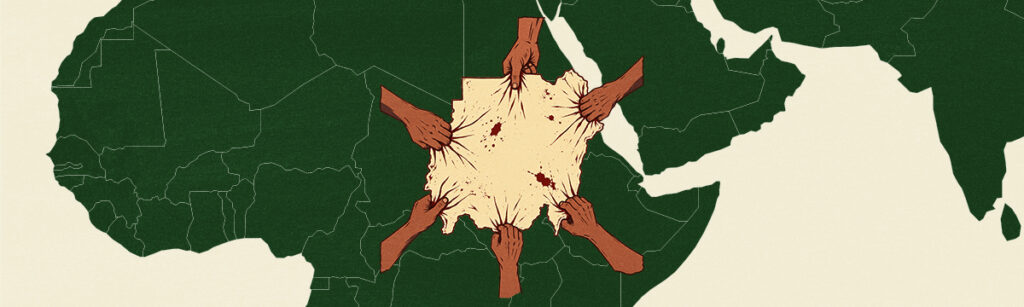
In July 2025, the European Union officially initiated a dispute settlement procedure against Algeria within the framework of their association agreement. This move follows several years of commercial tensions, especially over imports, investments, and Algeria’s industrial strategy. Behind this legal dispute lies a deeper questioning of the asymmetric relations between Europe and its southern neighbors.
Context and Origins of the Crisis
On March 20, 2024, the European Commission announced the formal launch of a dispute settlement procedure against Algeria under the EU-Algeria Association Agreement, signed in 2002 and in force since 2005. This procedure, grounded in Articles 100 to 102 of the agreement, aims to challenge a series of trade and regulatory practices adopted by Algiers since 2021, deemed incompatible with the principles of trade liberalization and non-discrimination.
On July 17, 2025, the Directorate-General for Trade of the European Commission notified the Algerian authorities of the initiation of arbitration proceedings regarding what it describes as trade and investment restrictions that violate the Association Agreement between Algeria and the EU.
Specifically, Brussels accuses the Algerian authorities of implementing measures that effectively restrict access to the Algerian market for European exporters. These measures include:
- A discriminatory import licensing system, effectively bans imports in several categories including vehicles, capital goods, processed agricultural products);
- The imposition of localization and integration rate requirements deemed excessive for foreign investors, particularly in the automotive sector;
- Caps on foreign ownership in import companies, compelling European firms to forfeit control over their subsidiaries or abandon certain activities;
- The persistence of non-transparent non-tariff barriers, including unjustified administrative delays, restrictive technical standards, and arbitrary customs procedures.
According to the EU, these practices violate not only the spirit of the Euro-Mediterranean partnership but also the specific provisions of the association agreement, which guarantees reciprocal market access and the progressive elimination of trade barriers.
Brussels’ decision comes after years of rising tension between the two parties. As early as 2018, European authorities expressed concern, particularly during Association Council meetings, without receiving satisfactory responses. Algerian restrictions—justified initially as necessary to stabilize the trade balance, these measures have evolved into long-term tools of economic regulation, diverging from the contractual commitments made to the EU.
This dispute reflects a broader erosion of Euro-Algerian economic dialogue. While the EU remains Algeria’s top trading partner (around 50.6% of trade in 2023), total EU exports to Algeria have steadily declined—from €22.3 billion in 2015 to €14.9 billion in 2023. This drop is partly due to the rise of Asian or South American suppliers, but also due to the gradual closure of the Algerian market to imports as part of the country’s reindustrialization efforts.
The EU–Algeria Association Agreement in Figures
- EU exports to Algeria: dropped from €22.3 billion (2015) to €14.9 billion (2023), a 33% decrease, indicating rising tensions.
- EU market share in Algeria: stable at over 50%, with dominance in machine tools, vehicles, and pharmaceuticals.
- Algerian imports of European industrial products: 95% duty-free since 2017.
- Algerian non-hydrocarbon exports to the EU: less than 2% of total exports, underscoring the asymmetry of trade benefits.
- European direct investment: concentrated in hydrocarbons, with no significant effect on industrial diversification.
Algeria’s Response
Algeria’s reaction to the arbitration procedure initiated by the European Union reflects a strategy of asserting economic sovereignty and growing rejection of the Eurocentric regulatorymodel. Immediately after Brussels’ announcement, the Ministry of Trade and Export Promotion issued a firm statement, denouncing a unilateral approach disconnected from Algeria’s economic realities. Algeria asserts that it has respected the principles of the association agreement to the extent of its strategic interests and claims the right to regulate foreign trade to protect its macroeconomic balance, trade surplus, and industrial sovereignty.
Algiers’ strategy rests on two pillars: first, a legal challenge based on a differentiated interpretation of the agreement’s provisions, particularly regarding safeguards and regulatory flexibility; second, a broader political stance, combining criticism of structural imbalances in Euro-Mediterranean relations with a sovereignist narrative.
Algeria recalls that the association agreement, signed in 2002 during a unipolar world order, was conceived with structural asymmetry: near-total opening of its market to European industrial products, without significant counterbalance in technological transfers, access to EU agricultural markets, support for local industrial development, or freedom of movement for people. According to Algiers, this asymmetry has deepened over the years, increasing Algeria’s trade dependency without contributing to the diversification of its economy.
In this light, the Algerian authoritiesinitiated a revision process of the agreement as early as 2020, aiming to rebalance mutual commitments. The EU’s decision to resort to arbitration is perceived as an attempt to counter this dynamic by activating the legal tools of an agreement Algeria now seeks to overhaul.
More broadly, Algeria’s response reflects a global geoeconomic repositioning. The country is actively developing strategic partnerships with China, Russia, BRICS countries, Turkey, and sub-Saharan African states. It has joined the BRICS’ New Development Bank (NDB), strengthened its ties with the Shanghai Cooperation Organisation (SCO), and advocates for deeper integration with its African neighbors through the African Continental Free Trade Area (AfCFTA).
In this context, the EU’s arbitration is seen not merely as a technical procedure but as a symptom of a shifting world order in which Global South countries increasingly challenge rules set by former colonial powers or their institutional successors. Economic sovereignty— once sidelined by neoliberal doctrines—is returning to the forefront of national strategy, fueled by a growing rejection of unilateral pressures from the Global North.
This chapter thus illustrates the ongoing shift in international balances: faced with an EU that clings to an asymmetric liberal framework built in the 2000s, Algeria is promoting an alternative vision based on reciprocity, South-South multilateralism, and the redefinition of global trade norms. This is not isolationism, but a strategic repositioning that should compel Brussels to reconsider its partnership tools and acknowledge the emergence of new regional powers.
Comparative Precedents
To fully grasp the scope of the procedure launched against Algeria, it is helpful to place it within the broader context of past trade dispute settlements initiated by the European Union with other Mediterranean partners or third countries signatory to association agreements.
Activating dispute settlement mechanisms remains rare in Euro-Mediterranean relations. However, several precedents allow us to assess both the leeway and the risks involved:
- In 2009, the EU threatened Morocco with arbitration over customs duties imposed on certain agricultural products. A political compromise was ultimately reached, avoiding litigation.
- In 2018, Tunisia received an informal warning regarding subsidies deemed discriminatory in the pharmaceutical industry.
- Beyond the Maghreb, more developed cases have involved Ukraine and Georgia, often resolved in favor of the EU due to disparities in legal and institutional expertise.
These precedents suggest that the current procedure could reinforce perceptions of a double standard—whereby the EU resorts to arbitration primarily to defend its commercial interestswhile failing to address its own restrictive practices.
What sets the Algerian case apart is the broader, systemic nature of the dispute. Far from a technical disagreement over a product or regulation, it constitutes an explicit challenge to the liberal paradigm underpinning the association agreements. Algeria is not contesting isolated elements of the agreement but rather its underlying rationale, which it now considers misaligned with its development priorities.
Potential Retaliatory Measures
In the event of an unfavorable arbitration ruling or escalating bilateral tensions, Algeria possesses a limited but strategically significant arsenal of retaliatory measures. The first of these would be the reconfiguration of trade flows and the restriction of concessions granted under the association agreement. This may include the suspension of certain technical provisions or the refusal to renew of specific trade advantages.
Algeria could also implement targeted customs countermeasures, impose market access restrictions on certain European firms, or condition public procurement on partnerships with non-European actors. This approach would fall under a doctrine of assertive economic sovereignty, aligned with a diversification of strategic partnerships.b
Nevertheless, any retaliatory measure would need to be carefully calibrated to avoid unintended consequences. The EU remains Algeria’s main energy customer and a leading partner in several industrial and banking sectors. Diplomatic leverage could also play a role: suspension of sectoral dialogues, amplification of rhetoric on North–South partnership inequality, or resorting to alternative forums such as the African Union or the G77 to internationalize the dispute.
Potential Retaliatory Measures by the European Union
The EU, for its part, also has a legal arsenal governed by European law and bilateral agreements. These may include:
- Restriction of access to the European market: partial or total suspension of tariff preferences granted to Algeria under the association agreement;
- Blocking technical or financial cooperation negotiations: especially in sensitive sectors like energy, research, or development aid;
- Regulatory or legal targeting: reinforced audits of Algerian products, imposition of restrictive sanitary or customs standards, or suspension of licenses for companies operating in Europe;
- Political use of conditionality: leveraging diplomatic and institutional tools to apply indirect pressure on Algiers, such as parliamentary resolutions, conditions within European programs, or stigmatizing official declarations.
These measures, however, carry significant risks for the EU itself. They could accelerate Algeria’s strategic realignment towards rival geopolitical blocs, and make European supply chains—especially for gas and raw materials—more vulnerable. Moreover, they could bolster critics of neo-colonial trade dynamics within Southern civil societies. Finally, they could strain intra-European relations—Italy, a close ally of Algeria, could find itself at odds with member states such as Spain or France.
Arbitration and Economic Sovereignty – Brussels’ Legal Weapon?
The initiation of arbitration proceedings marks a strategic shift in the European Union’s management of postcolonial partnerships: less focused on political cooperation and more on legal disciplining of partner economies.
This “litigation turn” transforms association agreements into binding instruments for preserving the liberal economic order, often at the expense of Southern countries’ economic policy flexibility.
By invoking dispute settlement, the EU is not only asserting commercial rights but also seeking to constrain national development trajectories that diverge from globalized market orthodoxy.
A Structural Asymmetry in the Association Agreement
The association agreement signed in 2002 and implemented in 2005 enshrines a logic of rapid trade liberalization, largely favoring European exports. Indeed, the EU has benefited from near-total access to the Algerian market for industrial products without any comparable level of reciprocity in sectors critical to Algeria—such as agriculture, services, or public procurement.
This asymmetric and disadvantageous nature of the agreement is especially evident in four areas:
First, the preferential access to the Algerian market for European industrial goods—exempt from customs duties in 95% of cases since 2017—has led to a rapid erosion of Algeria’s local production capacity, which has proven unable to compete without state support or a structured import-substitution strategy. Sectors such as textiles, electronics, mechanics, and some agro-food industries have seen their market share shrink, replaced by massive imports of finished products, often low in technological value but high in logistical dependence. Evidence of this can be found in Algeria’s suspension of ceramic and cosmetic imports, which led to a genuine industrial boom in those sectors within just five years.
Second, the structure of Algerian exports to the EU reveals a glaring imbalance: hydrocarbons account for more than 97% of the exported value, while manufactured or processed goods remain under 2%, highlighting the agreement’s failure to promote export diversification. This is exacerbated by the absence of credible European support for technology transfers, SME development, or technical training reforms.
Third, the agreement lacks effective safeguards for nascent industries or tariff flexibilities in times of economic crisis. Unlike other partners who secured safeguard mechanisms or periodic revisions of trade provisions, Algeria’s repeated requests for review have gone unanswered, fueling a sense of structural imbalance and European inaction.
Finally, from a regulatory standpoint, unilateral alignment with European standards—without equivalent concessions in access to public contracts, recognition of professional qualifications, or financial support—has solidified an asymmetric relationship. Instead of fostering convergence, this has locked Algeria into commercial dependency, with minimal impact on upgrading its industrial capacity.
In essence, this asymmetry stems from the agreement’s Eurocentric design, in which Algeria is viewed as an outlet for Europe’s industrial surplus, with no strategic consideration for local industrialization. Today, this fuels growing calls for a thorough revision of the partnership or its replacement with a new geoeconomic doctrine oriented toward multipolarity and productive resilience.
Revision or Rupture?
Since 2020, Algerian authorities have expressed their intention to renegotiate the terms of the agreement, in a spirit of reciprocity. President Abdelmadjid Tebboune described the treaty as “unfair” and “inequitable,” calling for a comprehensive revision. The freezing of certain clauses, the imposition of quotas, and the adoption of protectionist policies are aimed at restoring strategic policy space in the process of economic diversification.
Tensions between Algiers and certain European capitals—such as Paris and Madrid—have led to retaliatory measures by Algeria targeting companies and products from Spain and France, sometimes resulting in a complete halt in imports.
This hardening of stance fits into a broader geoeconomic repositioning: the search for more flexible partners, the strengthening of South–South cooperation, and the elevation of economic sovereignty as the cornerstone of Algeria’s new trade doctrine. Within this framework, the EU’s request for consultations appears as an affront—if not an attempt to reassert an outdated liberal agenda, that overlooks today’s multipolar realities.
The arbitration process launched by the EU marks a turning point for Algeria’s economic diplomacy. Since 2020, calls to challenge the contractual framework of the 2005 agreement have grown louder. President Abdelmadjid Tebboune has consistently and publicly denounced it as “imbalanced,” and authorities have begun unilaterally revising several implementing instruments.
This shift has materialized through the suspension of tariff advantages for European importers in certain sectors, the introduction of conditional import mechanisms (licensing systems, foreign currency caps), and the reorientation of industrial policies toward greater domestic value-added content. Meanwhile, Algiers has sent multiple messages to Brussels requesting formal negotiations to revise the agreement—none of which have been acknowledged or addressed.
Beyond technical objections, Algeria’s stance reflects a broader strategic realignment: a refusal to remain merely an energy supplier, a desire to reassert itself as a manufacturing actor, and a quest for a new position in global value chains. This ambition stems from the recognition that the association agreement has failed to wean the country off hydrocarbons or stimulate autonomous industrial growth.
In this sense, Algeria’s strategy oscillates between two paths: either radically reforming the existing framework by imposing reciprocal commitments and tangible development support (as in a co-development model), or gradually exiting the agreement and shifting focus to other economic partners—namely BRICS+, China, or Global South countries.
This turning point is also ideological. It reflects a growing rejection of the asymmetrical integration model promoted by the EU since the 2000s, in favor of a paradigm based on economic sovereignty, South–South regionalism, and alternative development models. It coincides with a global moment of challenge to neoliberal globalization frameworks and offers Algeria the opportunity to reposition itself not as a peripheral player in the European market, but as a regional industrial anchor in the Mediterranean and Africa.
Geoeconomic Alternatives to the EU
Faced with mounting European pressure, Algeria is actively exploring alternative partnerships.
The BRICS+ group, which Algeria once aspired to join as a full member, offers a platform for financial, industrial, and energy cooperation grounded in the principle of national sovereignty. Algeria is already a founding member of the BRICS’ New Development Bank.
China, through its “Belt and Road” Initiative, provides a more flexible investment framework, with infrastructure funding and technology transfers delivered without political conditionalities.
Russia, for its part, is strengthening its military and energy ties with Algiers within a framework of strategic convergence.
The Shanghai Cooperation Organisation (SCO) opens opportunities for economic, security, and customs coordination with Central and Southeast Asia. Algeria has also been turning toward Indonesia and Malaysia as potential sources of productive foreign investment.
The African Union and the African Continental Free Trade Area (AfCFTA) also hold increasing relevance for Algeria, which in recent years has sought to reorient its economy toward African markets. While the scope remains limited, the idea of African regionalism based on sovereignty is gaining traction in Algiers.
These alternatives are not without challenges, but they enable Algeria to redefine its interdependence architecture and move beyond its one-on-one relationship with the European Union—while diversifying its export markets and strategic alliances.
BRICS+ – A Lever for Empowerment?
Algeria’s membership in BRICS would strengthen its access to an alternative currency basket, to less conditional credit mechanisms (New Development Bank), and to forums for strategic coordination. This framework would also allow Algiers to advance its economic priorities outside the constraints of Western policy norms—particularly in the areas of industrial policy, subsidies, and energy sovereignty.
By aligning with a multipolar economic axis, Algeria would reduce its vulnerability to EU trade pressure while exploring asymmetrical free trade agreements tailored to its structural needs.
Conclusion
The arbitration initiated by the European Union may ultimately backfire on its architects. Rather than exerting discipline, it could prompt a symbolic rupture from a partnership model increasingly seen as obsolete by a growing segment of Algeria’s political and economic leadership.
In a post-Bretton Woods world—where alternatives are multiplying and the Global South is strengthening its bargaining power—the EU’s strategy appears increasingly out of step with the expectations of its southern neighborhood, which now demands trade justice, knowledge transfer, and sovereign equality. The outcome of this arbitration will thus be revealing: not only of Euro-Mediterranean power relations, but also of the European Union’s ability to adapt to the realities of the post-unipolar era.
The Post–Bretton Woods Era? The Decline of Euro-Atlantic Instruments in Africa
The normative influence of Western institutions (IMF, World Bank, EU) in shaping Southern economic models is waning. Several African states—from Zimbabwe to Ethiopia, and including Algeria—are experimenting with paths outside the Washington Consensus. The turn to alternative development banks (Asian Infrastructure Investment Bank, NDB, African Development Fund) marks a new phase in the continent’s financial sovereignty.
Additionally, the growing acceptance of non-Western currencies (yuan, ruble, rupee) in bilateral exchanges enables partial disengagement from the SWIFT system and reduces dependence on the dollar or euro. For Algeria, this reorientation is both a strategic imperative and a symbolic act of liberation from the economic conditionalities inherited from monetary colonialism.
Indicative Bibliography (Translated)
- EU–Algeria Association Agreement (2005), Official Journal of the EU.
- Statement from the European Commission, June 20, 2025.
- Communiqué from the Algerian Ministry of Trade, June 24, 2025.
- Badie, B. (2021). The End of Territories. Fayard.
- Rodrik, D. (2011). The Globalization Paradox. Norton.
- AMSE. (2024). State of Industrial Policies in Algeria.
- CEPS. (2023). Europe’s Trade Instruments and Southern Partners. Brussels.